Henro / Ohenro-san
遍路・お遍路さんHenro denotes both the Shikoku pilgrimage and a pilgrim who follows it. Ohenro-san is a respectful name for a pilgrim.
Shikoku Henro · Reference
Terms from the Shikoku Henro and Buddhist temple practice, arranged by subject and shown with their Japanese characters.
01
The Henro and the veneration of Kōbō Daishi, Buddhas, bodhisattvas and Myōō at the temples.
Henro denotes both the Shikoku pilgrimage and a pilgrim who follows it. Ohenro-san is a respectful name for a pilgrim.
Posthumous honorific title bestowed on the monk Kūkai, revered as the spiritual companion of the Shikoku Henro.
Buddhist monk (774–835) who established the Shingon school in Japan. In 921, Emperor Daigo bestowed upon him the posthumous title Kōbō Daishi.
A reverent and familiar name for Kōbō Daishi.
The Buddha of immeasurable light and life and of the Western Pure Land, Sukhāvatī.
One of the Five Wisdom Kings of esoteric Buddhism. His sword and rope signify the overcoming of ignorance and the guidance of sentient beings.
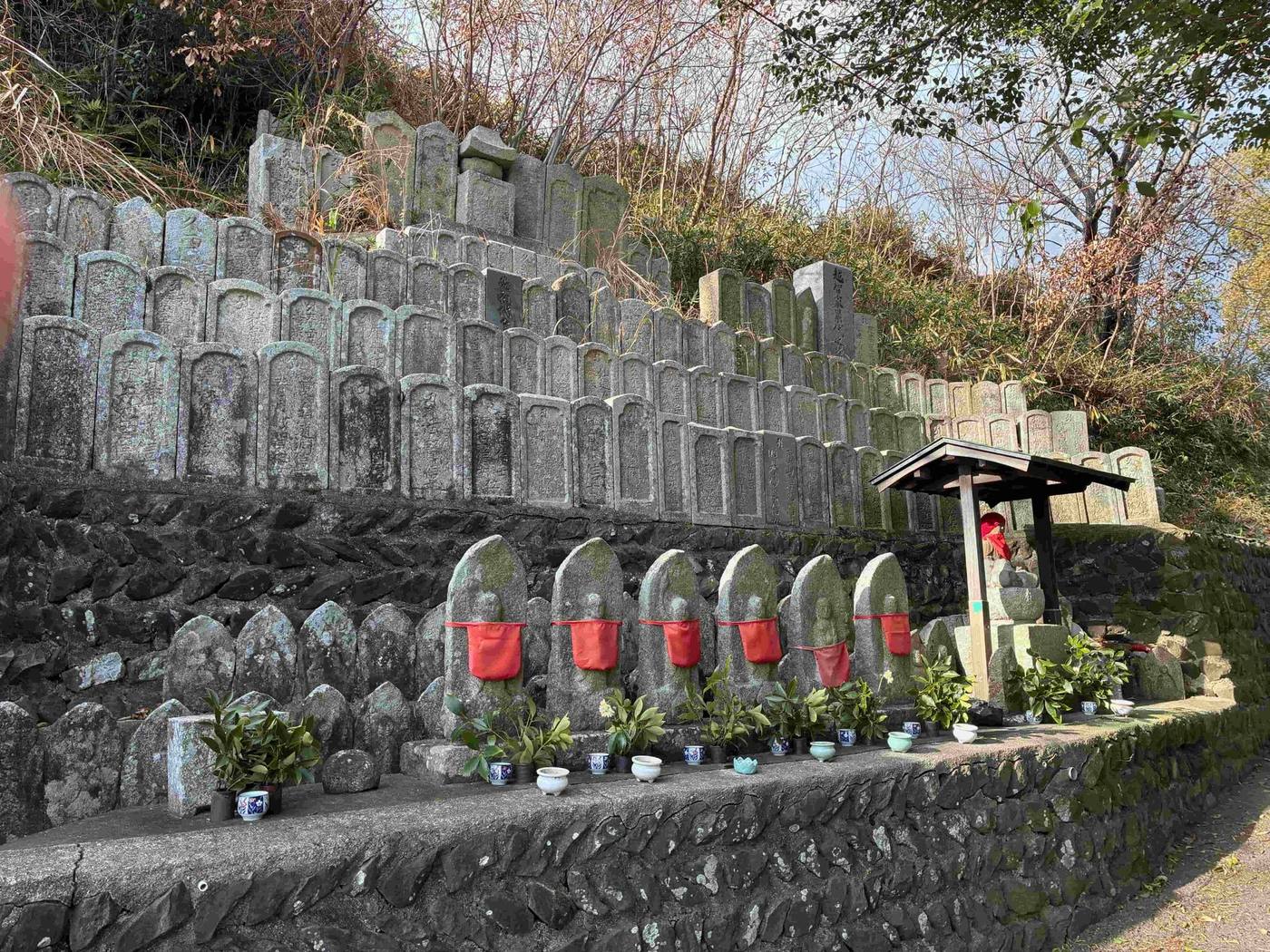
The Japanese name of the bodhisattva Kṣitigarbha, revered as a protector of children, the deceased and people on journeys.
The central Buddha of Shingon Buddhism, embodying all-encompassing reality.
The historical Buddha Siddhartha Gautama, whose teaching stands at the origin of the Buddhist traditions.
The Medicine Buddha, whose vows connect healing with the path to liberation.
A concealed Buddhist image shown to the public only on designated occasions.
02
Terms from Shingon Buddhism and its religious tradition.
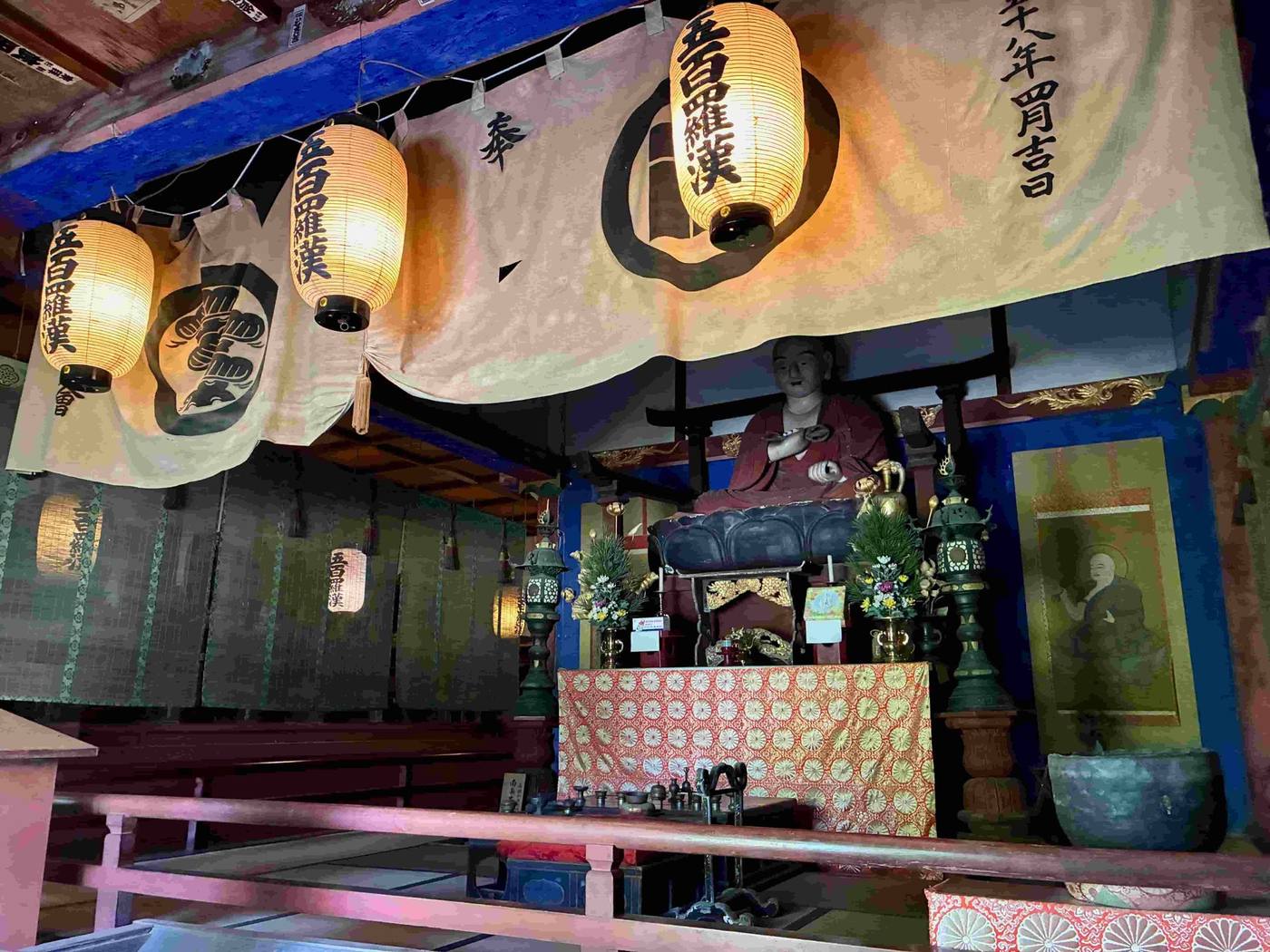
A religious term for entering profound meditative absorption. Within this living tradition of belief, Kōbō Daishi remains at Oku-no-in on Kōya-san in deep meditation.
Japanese school of esoteric Buddhism (Mikkyō) established by Kūkai.
Esoteric Buddhist tradition. In Japan, Shingon is commonly described as Mikkyō.
“Two travelling together.” The pilgrim understands the journey as one made in the company of Kōbō Daishi.
The three mysteries of esoteric Buddhism: the body, speech and mind of a Buddha and their correspondence in the practitioner.
A Shingon teaching that buddhahood can be realised in this very body and in this lifetime.
A visual ordering of Buddhist teaching and its cosmic relationships.
The Diamond Realm, whose mandala expresses the wisdom of Dainichi Nyorai.
The Womb Realm, whose mandala expresses the compassionate activity of Dainichi Nyorai.
A Pāli term for mindfulness and presence of mind in Theravāda Buddhism, included as part of the book project’s religious background.
03
Gestures, purification and the quiet order of prayer.
A gesture of prayer with the palms placed together before the chest.
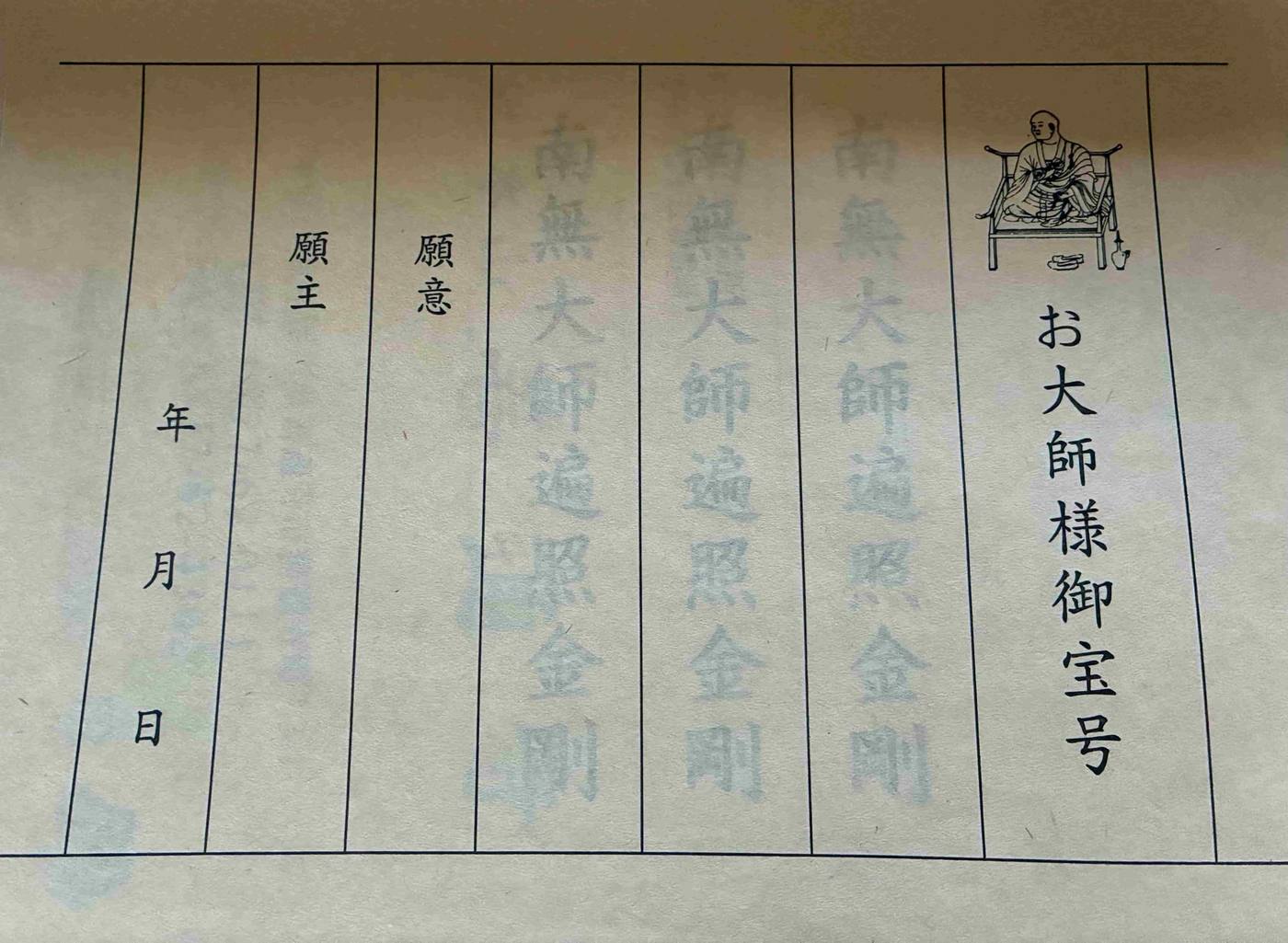
A mantra expressing devotion to Kōbō Daishi. Namu conveys homage or the taking of refuge. Henjō Kongō may be rendered as “the all-illuminating Vajra.”
The ringing of a temple bell after worship or while leaving the temple. In Henro practice, this “returning bell” is considered inauspicious and is therefore avoided.
Regular Buddhist liturgy comprising prayers and recitations.
An esoteric Buddhist term for the reciprocal working of a Buddha and a human being.
Melodic liturgical chanting in the Buddhist traditions of Japan.
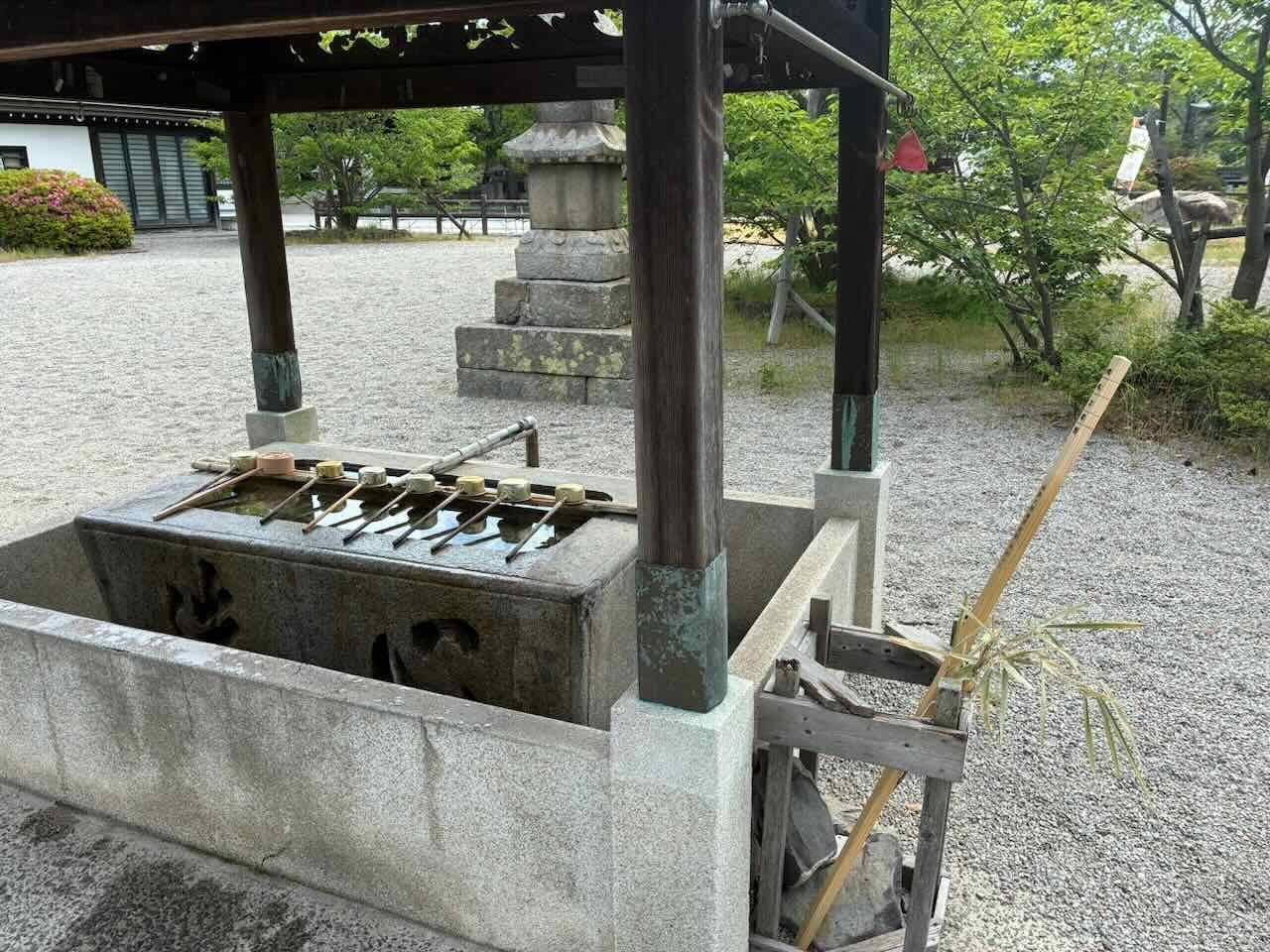
The ritual purification of hands and mouth before prayer at a temple or shrine.
A ritual passage through a completely dark chamber or corridor in certain temples.
A rite in which visitors step over sand from the 88 temples and symbolically complete the pilgrimage in one place.
A voluntary gift offered to a Henro, linking hospitality with the making of religious merit.
04
What pilgrims wear and carry on the road.
The white pilgrim garment worn over everyday clothing.
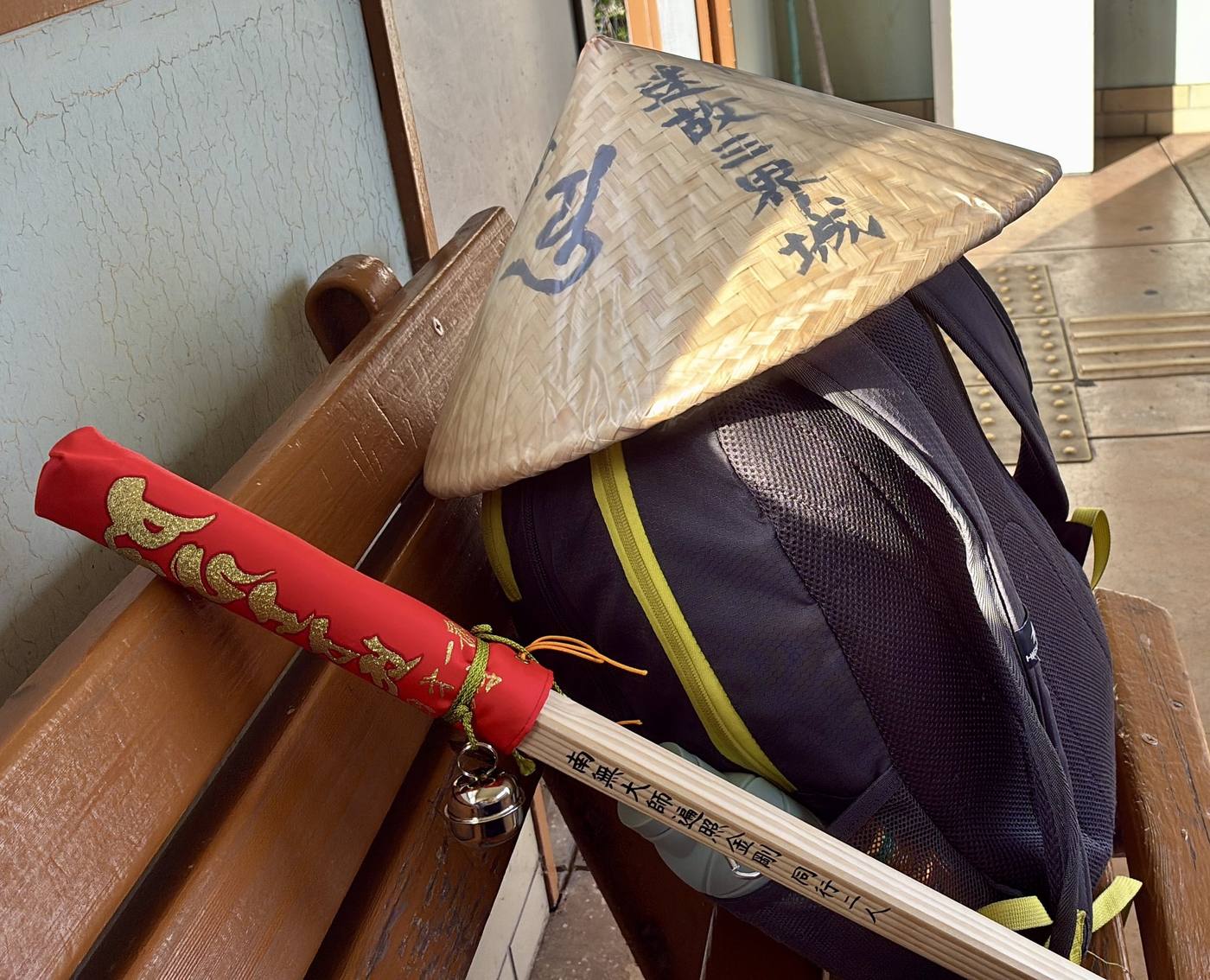
The Henro pilgrim staff, symbolically regarded as Kōbō Daishi and treated with respect.
Buddhist prayer beads used during recitation and prayer.
Traditional woven pilgrim hat protecting against sun and rain.
A narrow stole derived from the kesa, the robe of Buddhist monks, worn around the neck as a sign of pilgrim status.
A traditional pilgrim bag for the Nōkyōchō, prayer book, Osame-fuda and other Henro items.
A ritual implement of esoteric Buddhism symbolising the indestructible power and clarity of the teaching.
05
Thresholds between everyday and sacred space.
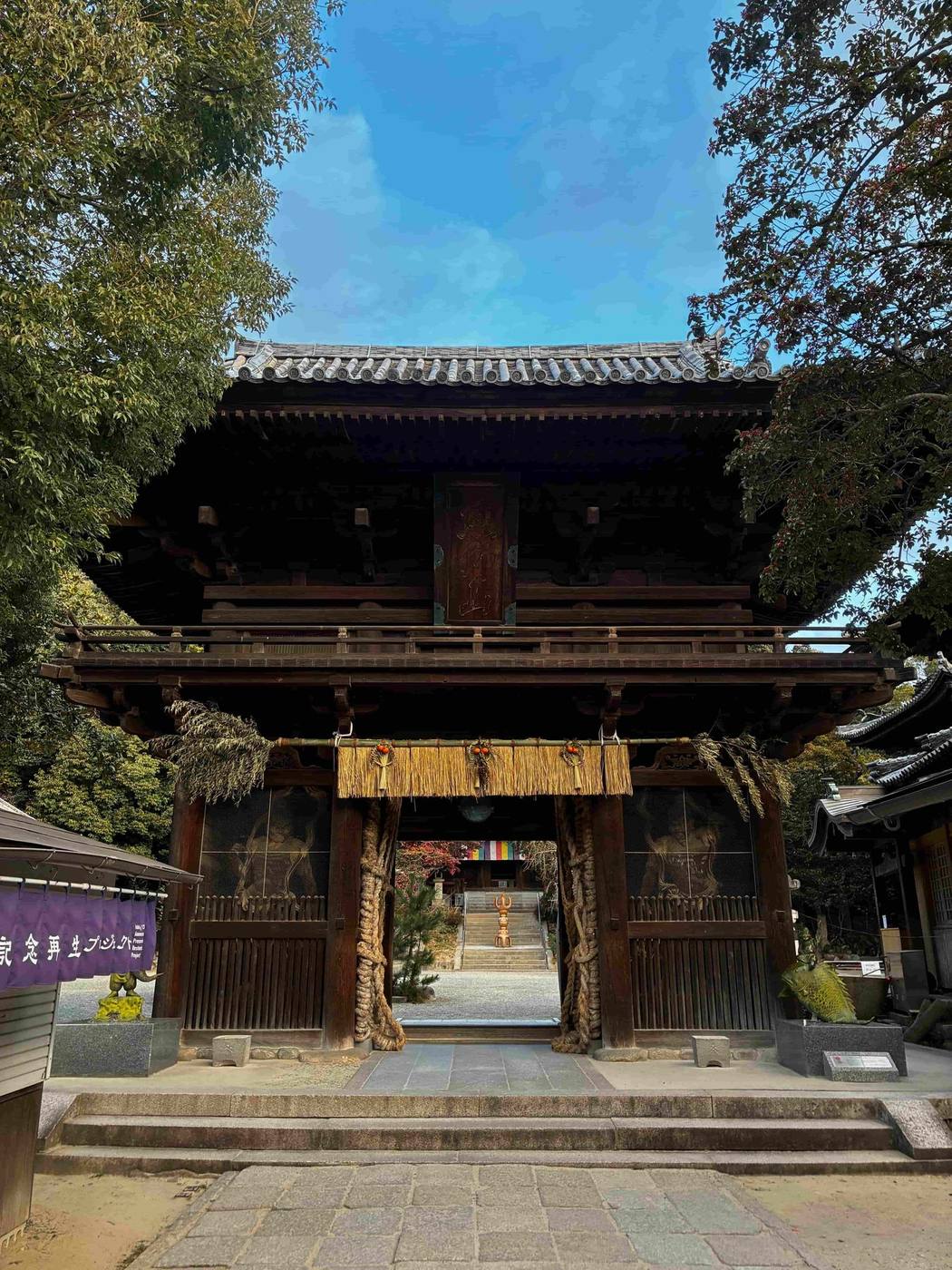
A temple gate guarded by the two Niō, who protect the temple precinct.
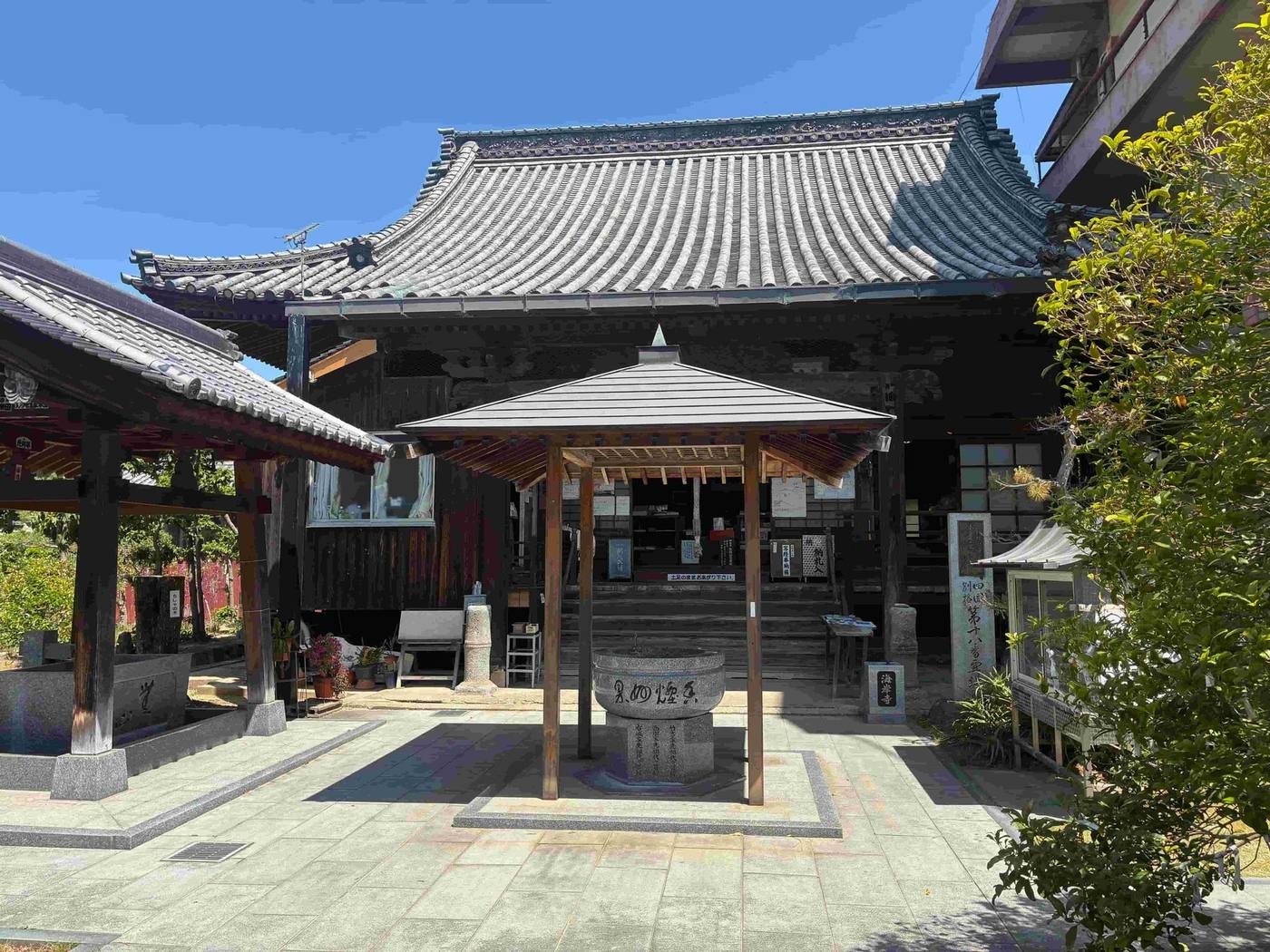
A pavilion with a water basin near the entrance of a temple or shrine, where visitors purify their hands and mouth before prayer.
A general term for the principal gate of a Buddhist temple.
A large or prominently designated entrance gate to a temple precinct.
A gate at a Shintō shrine marking the threshold to the realm of the kami.
A Shintō shrine where kami are venerated.
A ladle used by visitors to perform temizu at a Chōzuya.
06
Halls and places found across the pilgrimage temples.
Temple hall dedicated to Kōbō Daishi, traditionally visited after the Hondō.
An official temple on a pilgrimage route. The Shikoku Henro has 88 principal fudasho.
The main hall of a Buddhist temple, where its honzon is enshrined and venerated.
Sacred mountain region on the Kii Peninsula and centre of Shingon Buddhism.
Offertory box into which visitors place a coin as an offering at a temple or shrine.
A large bell, usually cast in bronze, at a Buddhist temple. It is sounded by striking the designated panel, the tsukiza, with a wooden shumoku.
A horizontally suspended wooden beam used to strike a bonshō.
The bell tower of a Buddhist temple, housing the bonshō.
Lodging in or beside a temple that may receive pilgrims and other guests.
The central image of veneration in a Buddhist temple.
An incense burner in which pilgrims offer senkō.
Incense sticks offered by pilgrims at the Hondō and Daishidō.
07
Books, slips and signs of a temple visit.
A book for calligraphy and seals from temples and shrines. On the Shikoku Henro, pilgrims generally use a dedicated Nōkyōchō.
The pilgrim book of the Shikoku Henro. Nōkyō literally means the offering of a sutra. After reciting at the Hondō and the Daishidō, or presenting a hand-copied sutra, the pilgrim receives a calligraphic inscription and the temple’s red seals at the Nōkyōsho.
An inscribed paper slip placed at the Hondō and Daishidō as a record of the pilgrim’s visit and prayer.
A calligraphic inscription bearing the red seals of a temple or shrine.
A paper image of a temple’s honzon received together with the nōkyō. In Henro tradition, the O-mie or O-sugata is treated as a visual presence of the venerated honzon and handled with due respect.
A sacred paper or wooden talisman issued by a temple or shrine for blessing or protection.
A box at the Hondō or Daishidō into which pilgrims place their Osame-fuda.
A box at a temple hall for offering a handwritten copy of a sutra.
The Heart Sutra, commonly recited by pilgrims at the temples of the Shikoku Henro.
The devotional practice of copying a sutra by hand and offering it.
A sheet or printed guide used for copying a sutra by hand.
A term used in this book project for a Shakyō sheet designed specifically for the Shikoku Henro.