Henrotwo books on the Shikoku Henro

Shikoku · 88 temples · two books in progress

The path beginsbefore the first step.

Two books on the Shikoku Henro: a companion for the road and a narrative about what remains of it.

To the books
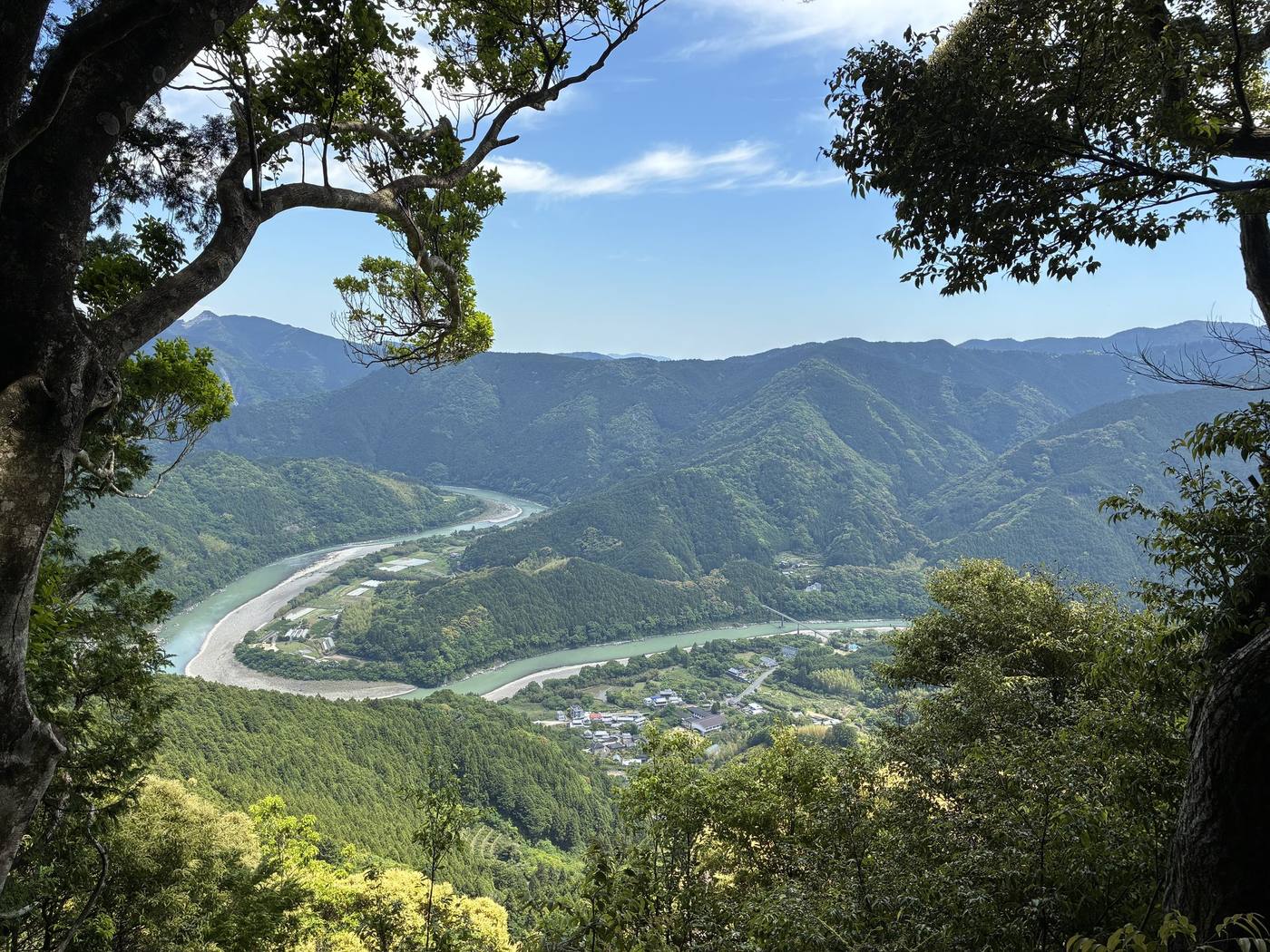
View over a forested river valley on Shikoku
On the road on Shikoku. · Photo: Sebastian Sachs

同行二人Dōgyō Ninin · Two walking together

01 · The books

Two books, one path

Pilgrim’s companion

Shikoku Henro – Der eigene Weg

A pilgrim’s companion

A compact companion for the road: getting there and planning stages, accommodation, the sequence of worship at the temples and a glossary of key terms. It brings my own experience together with the guidelines of the pilgrims’ association of the 88 temples.

Status: In editingWritten in GermanGlossaryLearning module
Main work

Dōgyō Ninin – Zwei gehen gemeinsam

Two walking together

A personal narrative of the Henro, combined with essays and a religious-studies perspective on practice at the temples. The book grows with the road and will be completed when my Henro has come to its end.

Status: In progressWritten in GermanTravel notes

02 · Travel notes · From “Dōgyō Ninin”

Stages of a journey

Short passages from temple visits and encounters. Each text preserves a moment without giving it more certainty than it possessed on the road.

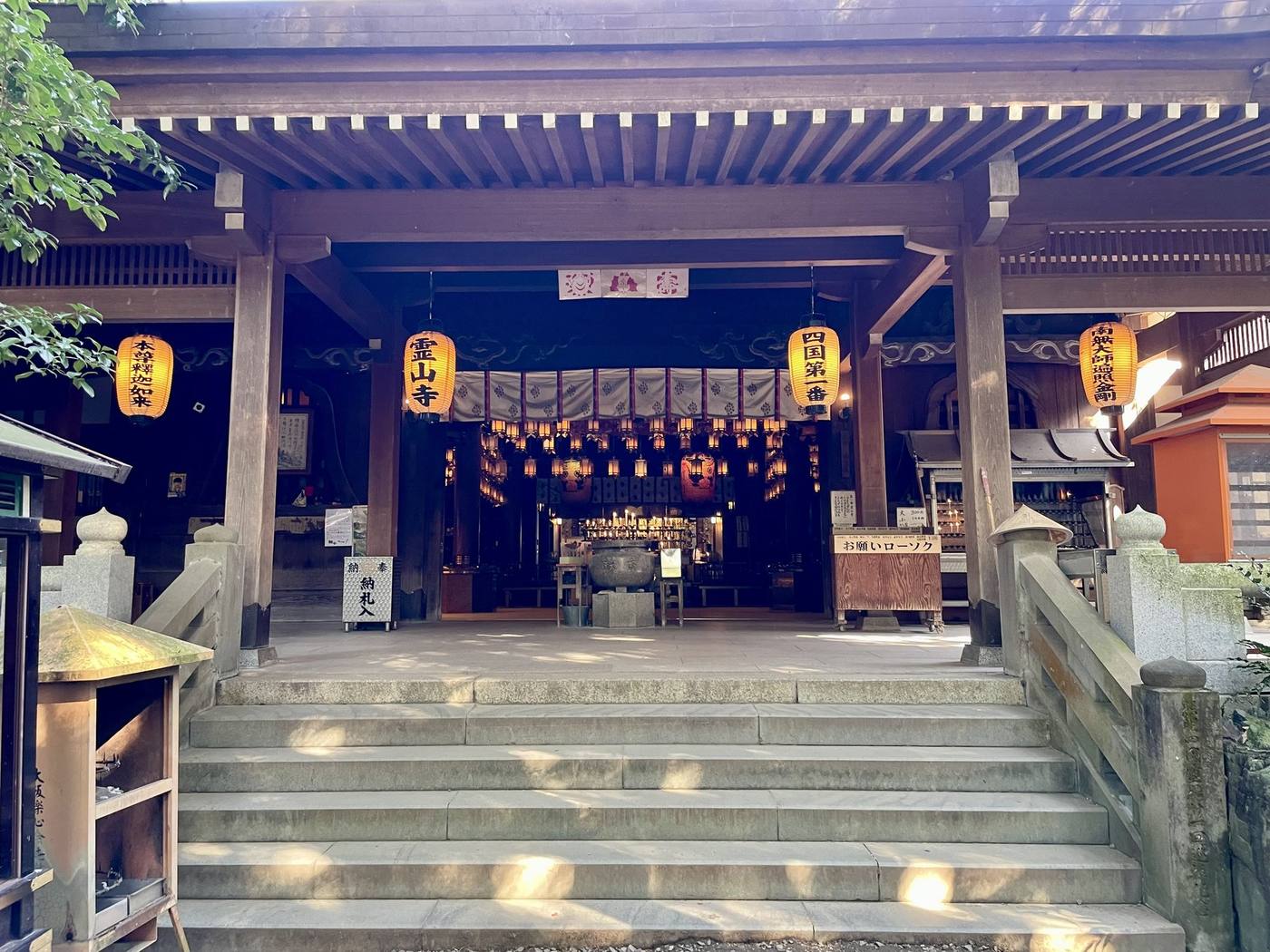
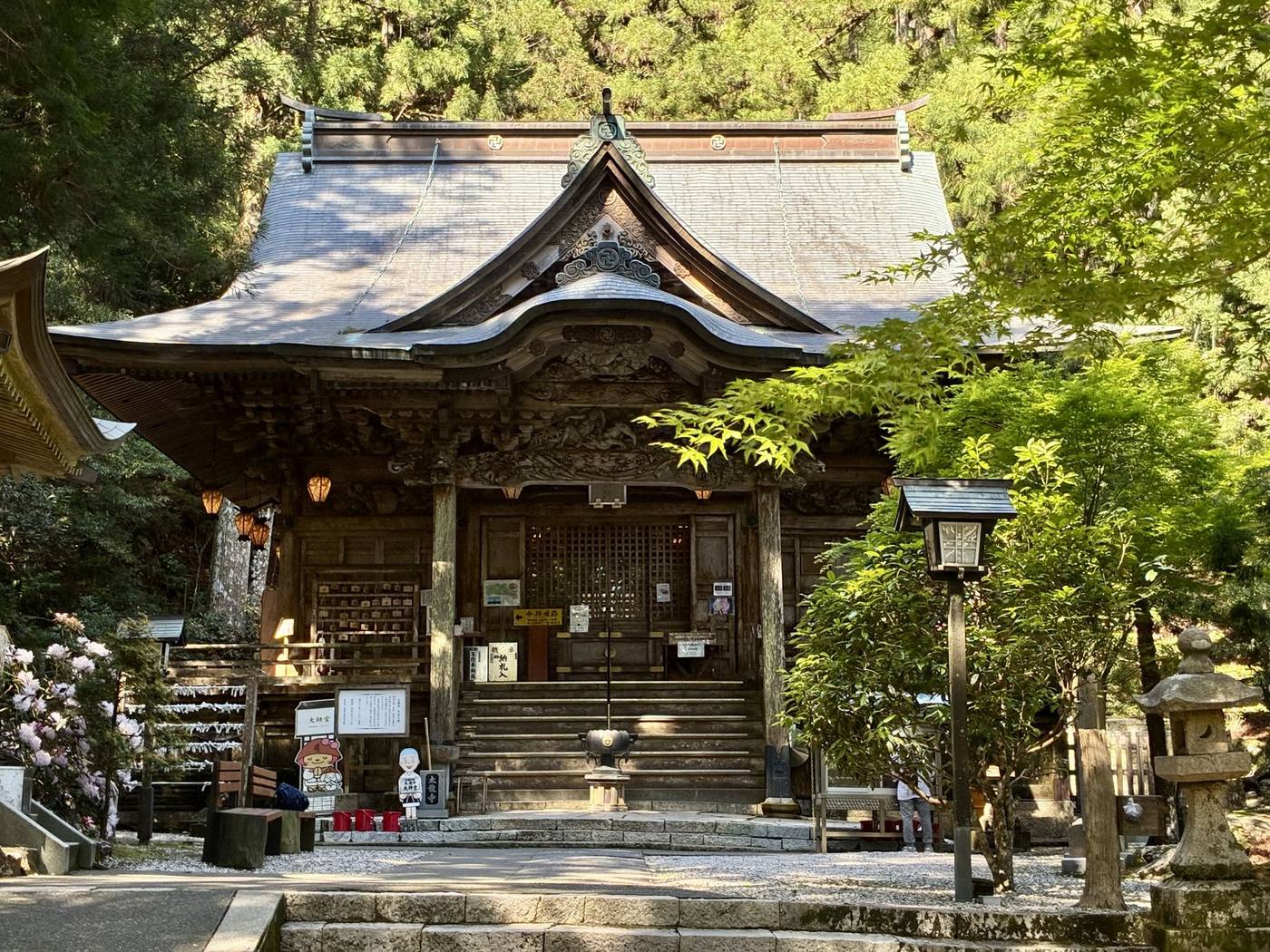
Main hall of Ryōzen-ji with lit lanterns
01Ryōzen-ji · Temple 1

The same place, seen differently

Only a few minutes have passed since I first entered Ryōzen-ji and visited the pilgrim shop – and yet it feels as though worlds lie between then and now. Before, I was still a visitor, perhaps a seeker or merely a quiet observer. Now I wear the WagesaWagesa 輪袈裟
A narrow stole derived from the kesa, the robe of Buddhist monks, worn around the neck as a sign of pilgrim status.
, the narrow stole that marks the pilgrim, together with the HakueHakue 白衣
The white pilgrim garment worn over everyday clothing.
, the white pilgrim shirt.

Read moreShow less

With the clothing, more than my appearance changes. It marks the passage into a space removed from everyday life. I return as someone who has set foot on this path – not yet fully a Henro, but with an awareness that has shifted. The temple grounds suddenly feel denser. My gaze comes to rest on the HondōHondō 本堂
The main hall of a Buddhist temple, where its honzon is enshrined and venerated.
: broad stone steps, massive beams of dark, warm wood, and large paper lanterns bearing the inscription 四国第一番 – Shikoku Number One.

The Hondō of Ryōzen-ji, Temple 1. · Photo: Sebastian Sachs

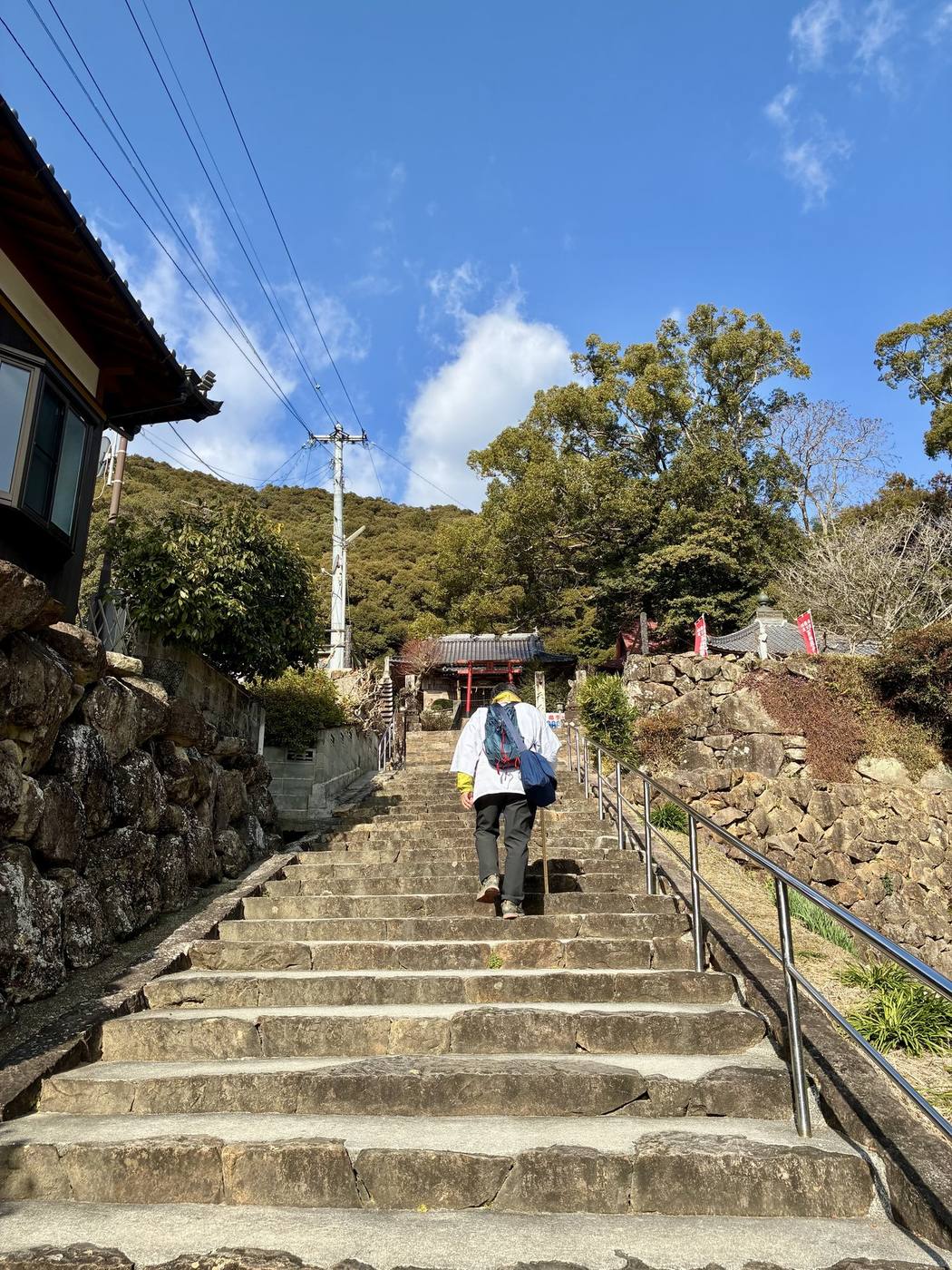
A Henro climbs the stone steps to Ryūkō-ji
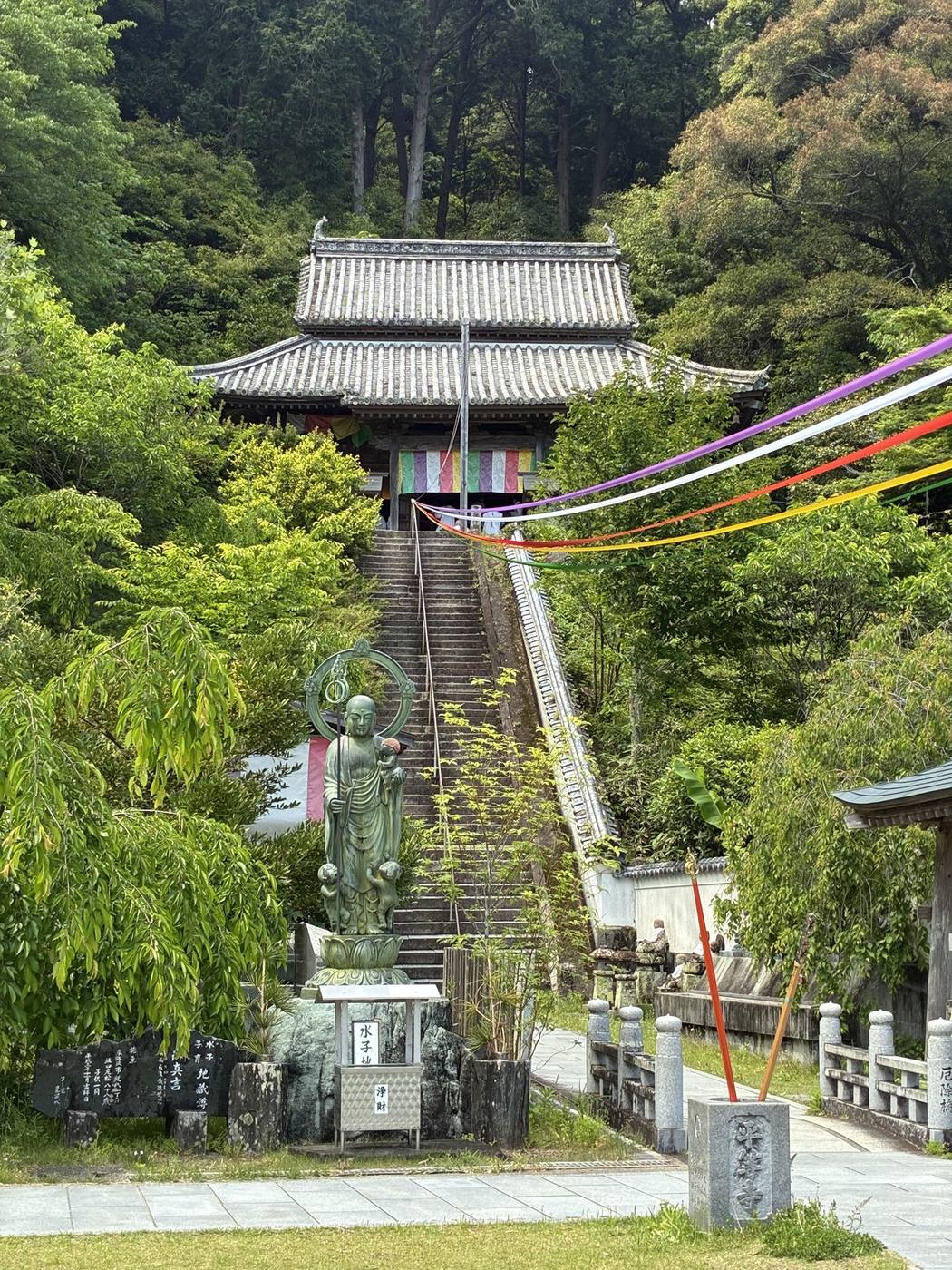
02Ryūkō-ji · Temple 41

The silent companion

Already on the regional train, my eye falls on another Henro: a man of perhaps sixty, absorbed in books, maps and loose pages. When we get off, he walks a few metres ahead of me, calmly and purposefully. I follow at a distance and adjust to his pace. The way unfolds from another person’s movement.

Read moreShow less

We exchange no words. Two pilgrims in white, joined by the same direction. The distance between us remains. When he stops before the temple and I arrive shortly afterwards, our shared path ends. For a short stretch we were a community – my unknown, silent companion and I.

A Henro on the steps to Ryūkō-ji, Temple 41. · Photo: Sebastian Sachs

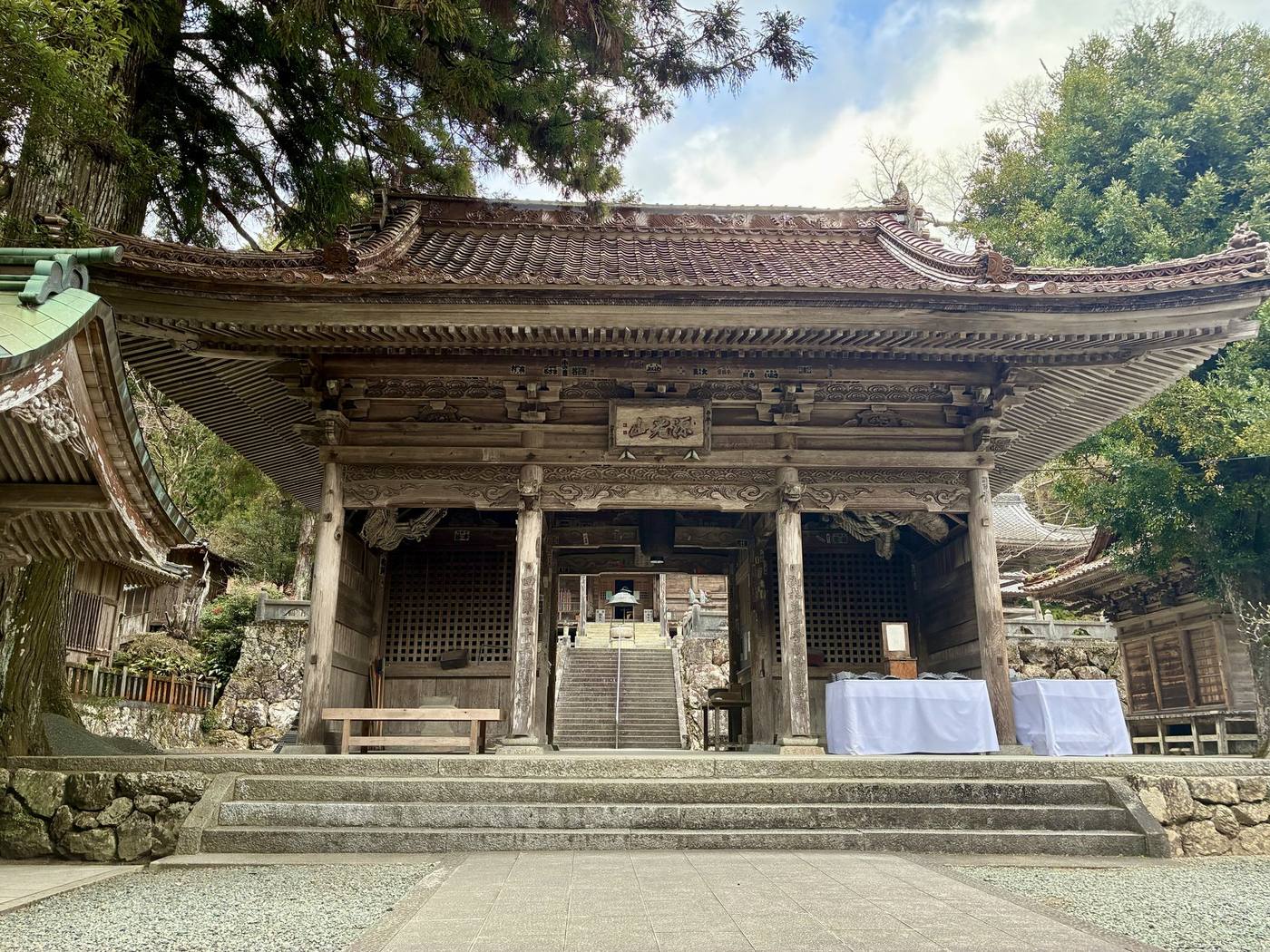
Wooden temple gate of Meiseki-ji
03Meiseki-ji · Temple 43

Traces of the road

I reach Meiseki-ji in the late afternoon. Silence lies over the grounds. From somewhere in the distance, the call of a crow. The last rays of sunlight break through the canopy above the great Niōmon. In the Hondō, the golden Senju Kannon glimmers in the half-light. Brown leaves loosen from the branches of a ginkgo tree and drift slowly to the ground.

Read moreShow less

Before the altar, an iron grate marks the boundary to the space beneath the hall. It is an unfamiliar sight. Elsewhere, a wooden Saisen-bakoSaisen-bako 賽銭箱
Offertory box into which visitors place a coin as an offering at a temple or shrine.
– an offertory box – usually receives the visitors’ coins. I throw a coin through the grate. A clear metallic note rises from the depths. It spreads through the hall and gradually dissolves into the silence.

Then I take the last three incense sticks from my bag. They stand, as is often explained, for past, present and future. The long road has marked them. Some are broken, their edges frayed. In these traces the distance travelled seems preserved: cold morning hours, wide temple courtyards and the bag opened again and again.

I light them from the flame of my candle. Fine threads of smoke rise. The traces of the road become part of the offering. And as they slowly burn down – Namu Daishi Henjō KongōNamu Daishi Henjō Kongō 南無大師遍照金剛
A mantra expressing devotion to Kōbō Daishi. Namu conveys homage or the taking of refuge. Henjō Kongō may be rendered as “the all-illuminating Vajra.”
.

Meiseki-ji, Temple 43, in the late afternoon. · Photo: Sebastian Sachs

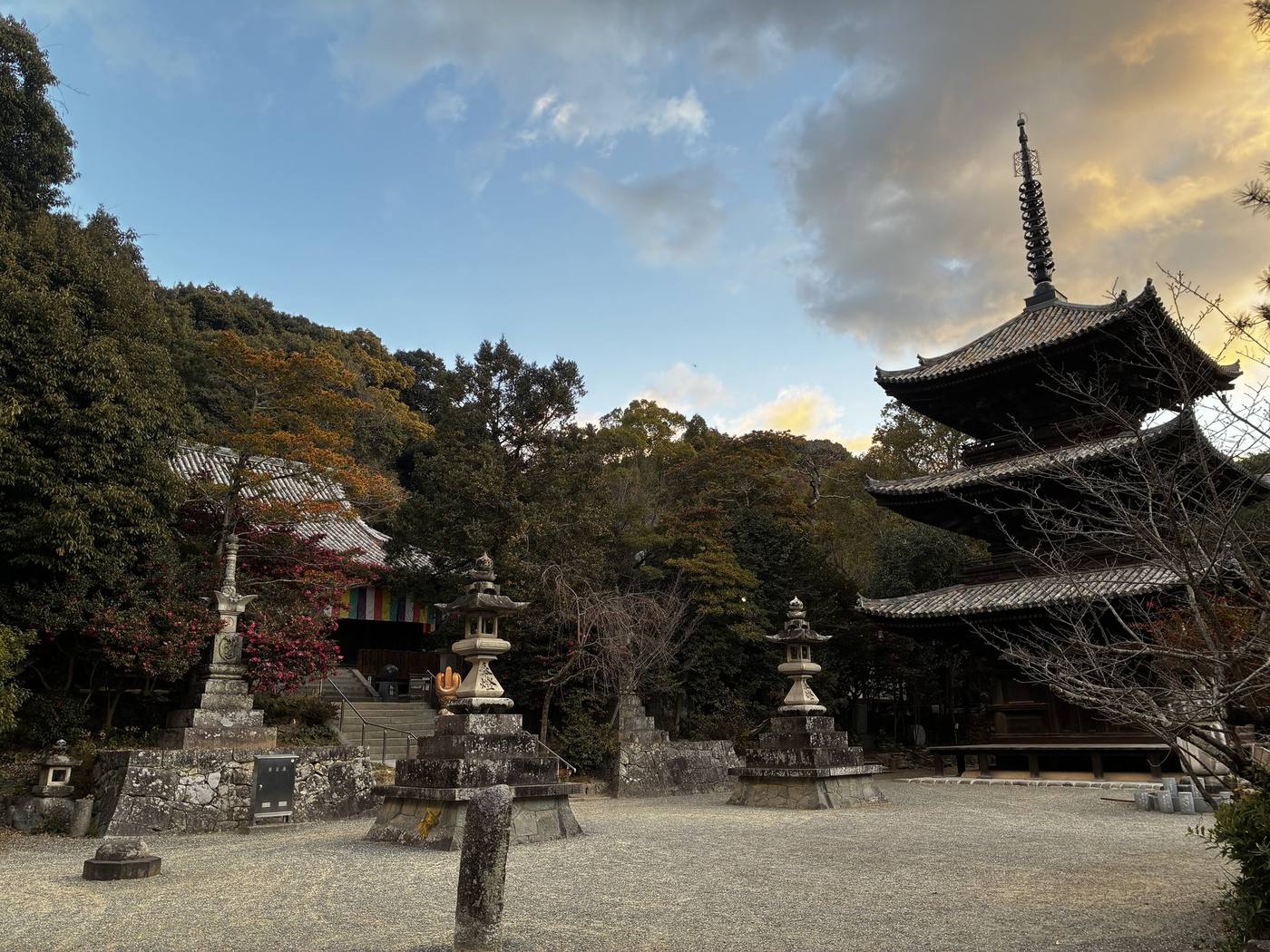
Courtyard and pagoda of Ishite-ji in the morning light
04Ishite-ji · Temple 51

A winter morning

It is still dark when the day begins: the clear black of a winter morning in which every breath becomes visible. The temperature is zero degrees. In my bag are NenjuMala / Nenju 数珠・念珠
Buddhist prayer beads used during recitation and prayer.
, Wagesa and Hakue. I put on the pilgrim clothing and step out into the cold.

Read moreShow less

After half an hour I reach Ishite-ji. At the TemizuyaTemizuya / Chōzuya 手水舎
A pavilion with a water basin near the entrance of a temple or shrine, where visitors purify their hands and mouth before prayer.
I let the cold water from the ladle run over my fingers. First I cleanse my left hand, then my right, then my mouth.

A temple attendant sweeps the forecourt. He works with a care reminiscent of tending a stone garden. The even stroke of the broom carries far.

I pass through the NiōmonNiōmon 仁王門
A temple gate guarded by the two Niō, who protect the temple precinct.
. Beyond it, the wide temple courtyard opens up with the Hondō, the DaishidōDaishidō 大師堂
Temple hall dedicated to Kōbō Daishi, traditionally visited after the Hondō.
and the great bronze VajraVajra / Kongōsho 金剛杵
A ritual implement of esoteric Buddhism symbolising the indestructible power and clarity of the teaching.
. The first rays of sunlight warm the centuries-old wood of the great pagoda.

The courtyard of Ishite-ji in the early morning. · Photo: Sebastian Sachs

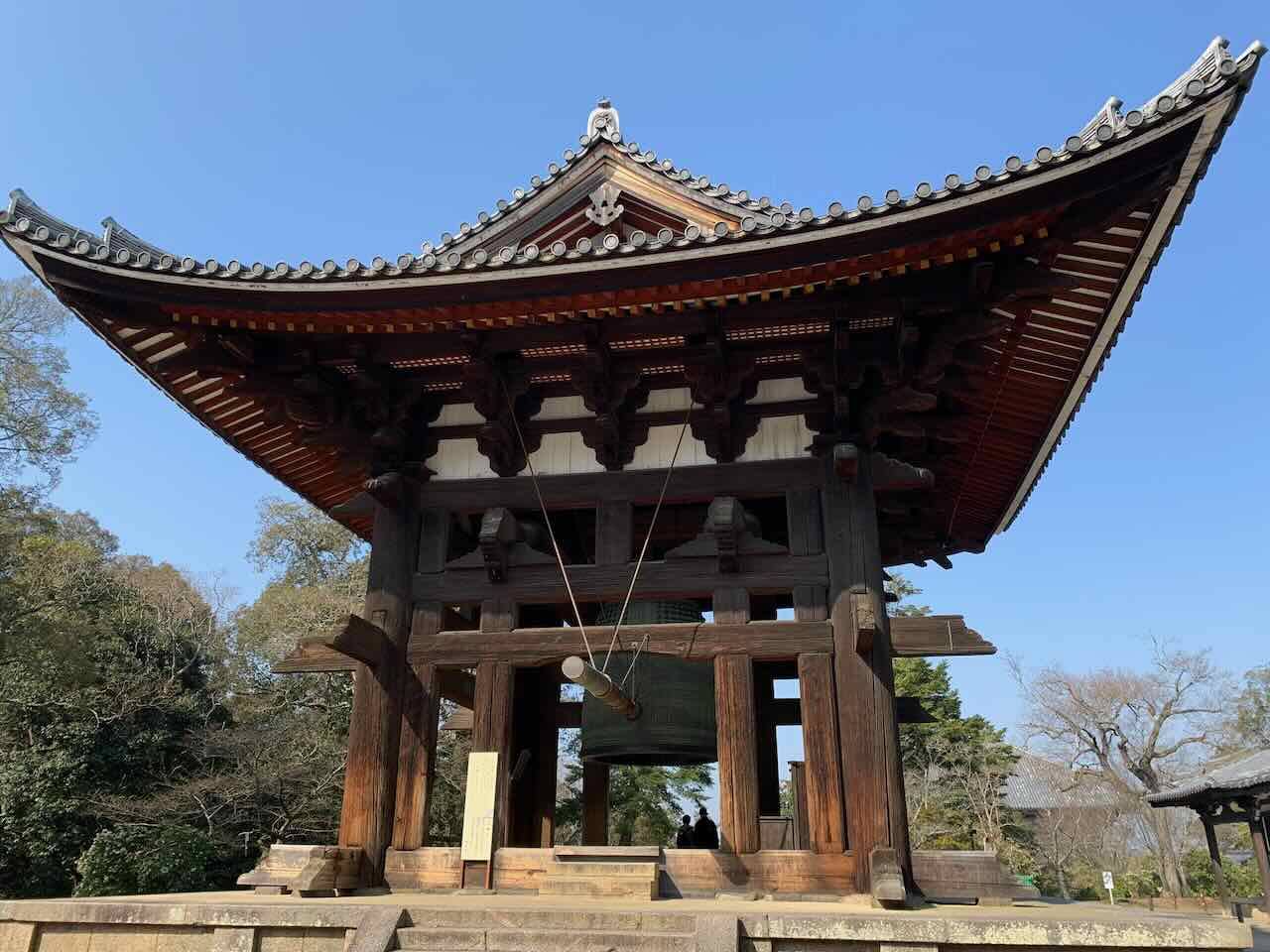
Large Buddhist temple bell in a wooden bell tower with a horizontally suspended shumoku
05Enmyō-ji · Temple 53

What the bell announces

Another winter day, cold and clear. From the slope of Taisan-ji, Temple 52, the henro-michi descends into the plain. Wooden signposts mark the way past rice fields and along quiet roads. On the outskirts of Matsuyama, the gate of Enmyō-ji suddenly comes into view – the final temple of the day.

Read moreShow less

At the entrance, I meet the older pilgrim couple again. A smile, a bow. I follow them through the gate at a respectful distance. They cleanse their hands and rinse their mouths at the Temizuya before walking towards the ShōrōShōrō 鐘楼
The bell tower of a Buddhist temple, housing the bonshō.
. The man draws back the ShumokuShumoku 撞木
A horizontally suspended wooden beam used to strike a bonshō.
and lets it swing gently against the BonshōBonshō 梵鐘
A large bell, usually cast in bronze, at a Buddhist temple. It is sounded by striking the designated panel, the tsukiza, with a wooden shumoku.
. A deep tone fills the temple grounds. The couple remains still, heads bowed, until the sound fades. Only then do they continue to the Hondō.

At several earlier temples, I struck the bell out of gratitude as I left. Later, I learn that such a strike is avoided as Modori-ganeModori-gane 戻り鐘
The ringing of a temple bell after worship or while leaving the temple. In Henro practice, this “returning bell” is considered inauspicious and is therefore avoided.
, the “returning bell”. The bell announces arrival.

The couple, whom I meet for the second time that day, shows me the proper order without a word.

A bonshō with its wooden shumoku at a Buddhist temple in Japan. · Photo: Sebastian Sachs

06

日本の皆さまへ

はじめまして。ドイツに住み、区切り打ちで四国遍路を歩いております、セバスティアン・ザックスと申します。

このサイトでは、海外から訪れた一人の巡礼者として見た四国遍路を、ドイツ語・英語・日本語でお伝えしております。学習教材「四国遍路を知る」の日本語版もご用意いたしました。言葉づかいや説明に不自然な点、誤りなどがございましたら、ご指摘いただけますと幸いです。

ご感想やご意見は、下記のメールアドレスまでお寄せください。

四国で出会った皆さまのご親切に、心より感謝申し上げます。

合掌 セバスティアン・ザックス

✉ メールを送る

sebsachs@web.de

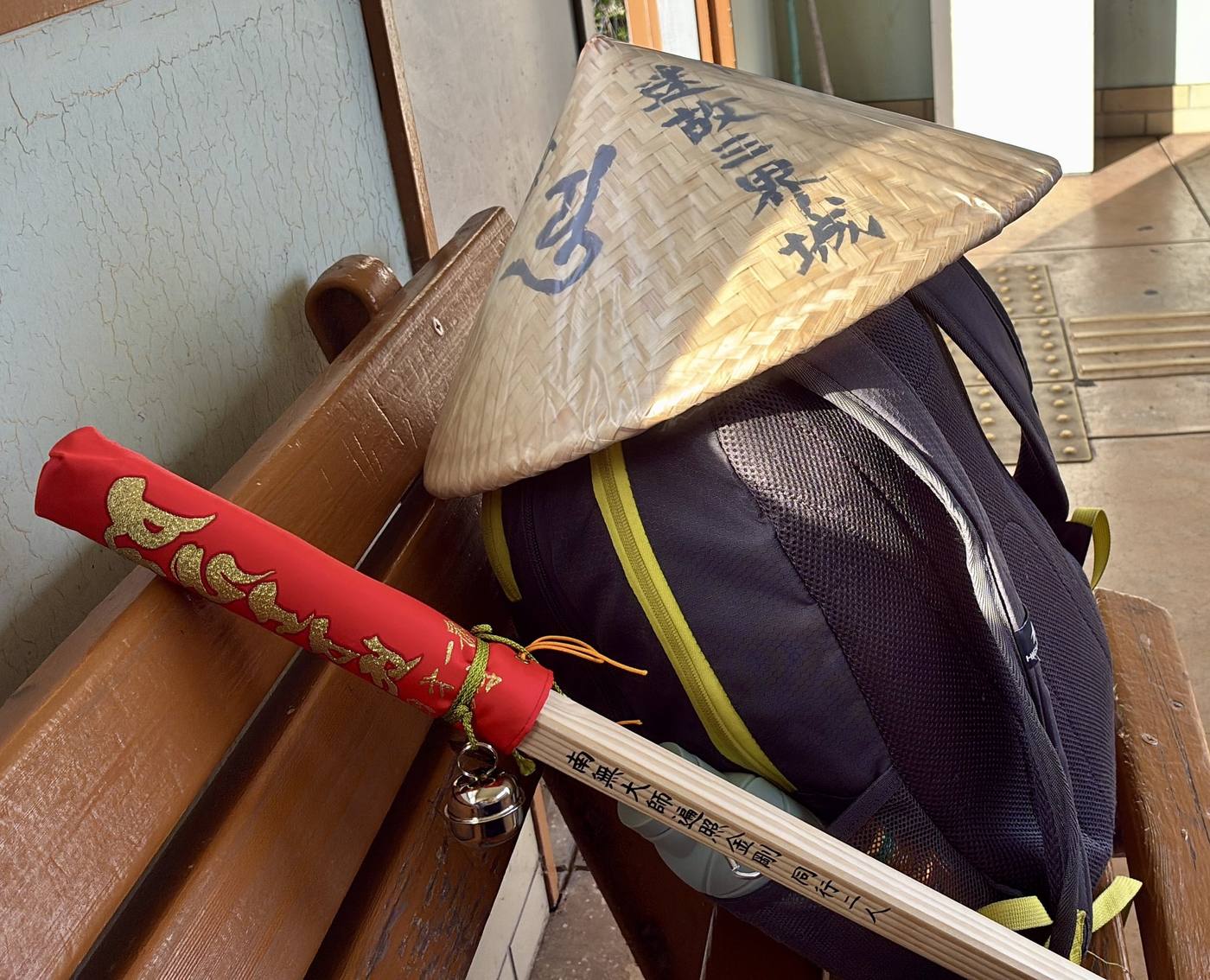
Pilgrim hat, staff and backpack on a bench
Pilgrim equipment on the road: Sugegasa, Kongō-zue and backpack. · Photo: Sebastian Sachs

03 · Departure

Some journeys begin with a sense of unease.

With the feeling that something in one’s life has grown too loud – or too empty. That paths walked for a long time, though familiar, no longer carry us. That explanations are no longer enough.

I did not travel to Japan to find answers. I travelled because I had lost sight of the questions.

In this sense, pilgrimage is above all an attitude: a form of attention and perseverance, in the literal as well as the figurative sense.

The Shikoku Henro appeared to me as a path on which I may question myself, even what has defined me until now.

How long it takes and in which stages it is walked is left to each person.

04 · Understanding the Henro

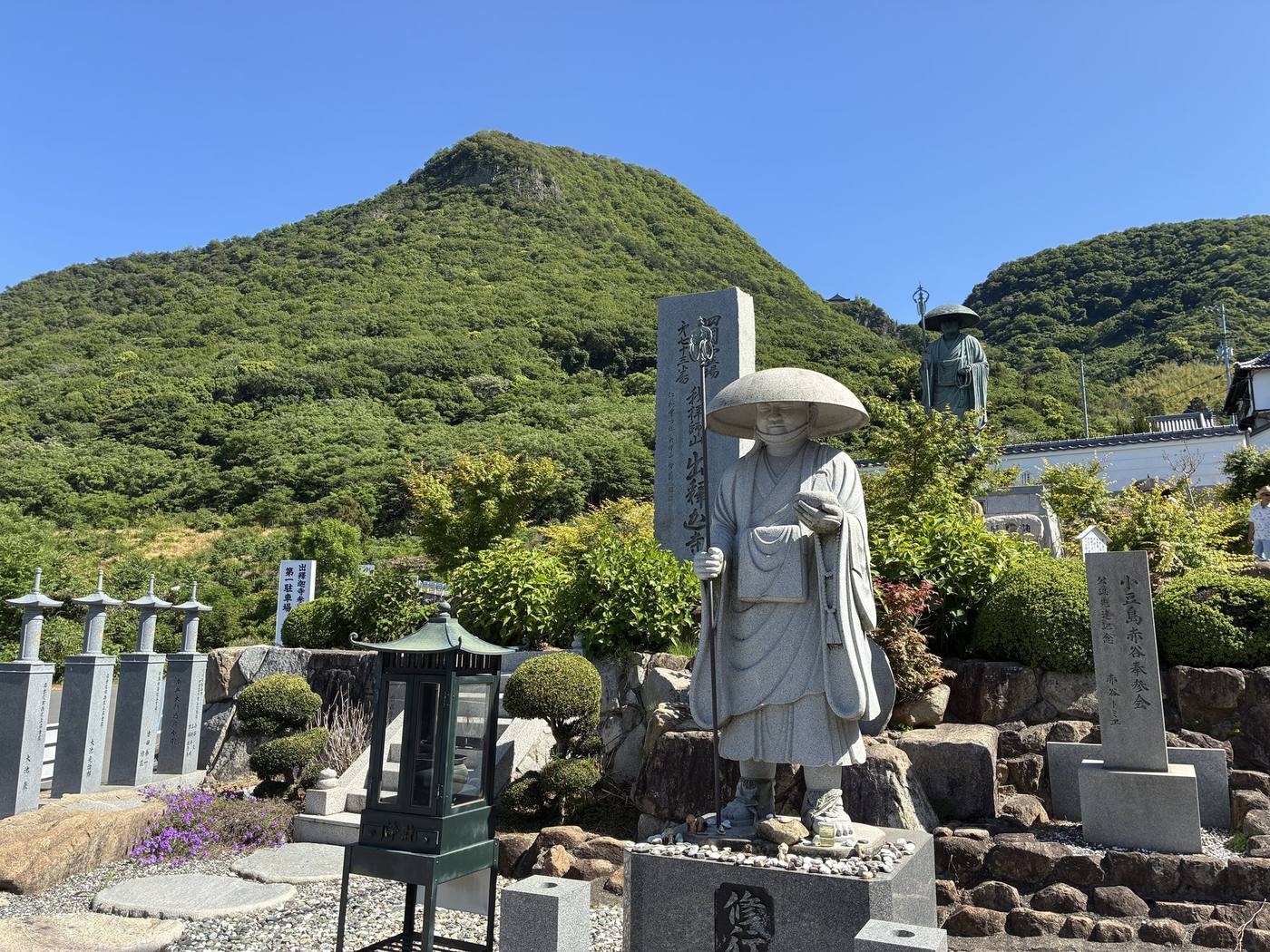
Depiction of Kōbō Daishi at Shusshaka-ji below Mount Gahaishi
Shusshaka-ji, Temple 73, at the foot of Mount Gahaishi. According to legend, the seven-year-old Kūkai threw himself from the mountain here and was saved by Shaka Nyorai. · Photo: Sebastian Sachs

Kūkai · 774–835

Kūkai – the companion of the Henro

KūkaiKūkai 空海
Buddhist monk (774–835) who established the Shingon school in Japan. In 921, Emperor Daigo bestowed upon him the posthumous title Kōbō Daishi.
was born in Sanuki on Shikoku in 774. A monk and poet, he travelled to Tang China in the early ninth century. There he studied esoteric Buddhism with Huiguo, known in Japanese as Keika. After returning, he established ShingonShingon 真言
Japanese school of esoteric Buddhism (Mikkyō) established by Kūkai.
, the Japanese tradition of Vajrayāna BuddhismVajrayāna / Mikkyō 金剛乗・密教
Esoteric Buddhist tradition. In Japan, Shingon is commonly described as Mikkyō.
.

According to tradition, Kūkai entered nyūjōNyūjō 入定
A religious term for entering profound meditative absorption. Within this living tradition of belief, Kōbō Daishi remains at Oku-no-in on Kōya-san in deep meditation.
at Oku-no-in on Kōya-sanKōya-san 高野山
Sacred mountain region on the Kii Peninsula and centre of Shingon Buddhism.
, a sacred mountain south of Ōsaka, in 835. Within this living tradition of belief, he remains there in profound meditative absorption. In 921, Emperor Daigo bestowed upon him the honorific title Kōbō DaishiKōbō Daishi 弘法大師
Posthumous honorific title bestowed on the monk Kūkai, revered as the spiritual companion of the Shikoku Henro.
. He is also addressed, respectfully and affectionately, as Odaishi-samaOdaishi-sama お大師さま
A reverent and familiar name for Kōbō Daishi.
.

Kūkai received the initiatory name Henjō Kongō in China from his teacher Huiguo. The mantra Namu Daishi Henjō KongōNamu Daishi Henjō Kongō 南無大師遍照金剛
A mantra expressing devotion to Kōbō Daishi. Namu conveys homage or the taking of refuge. Henjō Kongō may be rendered as “the all-illuminating Vajra.”
expresses devotion to Kōbō Daishi. Namu conveys homage or the taking of refuge. Henjō Kongō may be rendered as “the all-illuminating Vajra.”

Stone steps and temple hall of Byōdō-ji
Stone steps and the temple hall at Byōdō-ji, Temple 22. · Photo: Sebastian Sachs

Path and pilgrim

The name describes both the path and the person walking it.

The Shikoku HenroHenro / Ohenro-san 遍路・お遍路さん
Henro denotes both the Shikoku pilgrimage and a pilgrim who follows it. Ohenro-san is a respectful name for a pilgrim.
links 88 temples over a distance of roughly 1,200 kilometres. It crosses Shikoku’s four prefectures, along the coast and up to remote mountain temples. Whoever walks it is also a Henro, respectfully called Ohenro-san.

There is no compulsory order. A pilgrim may begin at Temple 1, enter the route elsewhere or travel in reverse. Each pilgrim also chooses how to travel: on foot, by public transport or by car. Even after visiting all the temples, the Henro remains open.

Pilgrim attire and equipment include the HakueHakue 白衣
The white pilgrim garment worn over everyday clothing.
, WagesaWagesa 輪袈裟
A narrow stole derived from the kesa, the robe of Buddhist monks, worn around the neck as a sign of pilgrim status.
, SugegasaSugegasa 菅笠
Traditional woven pilgrim hat protecting against sun and rain.
and the Kongō-zueKongō-zue 金剛杖
The Henro pilgrim staff, symbolically regarded as Kōbō Daishi and treated with respect.
staff, as well as NenjuMala / Nenju 数珠・念珠
Buddhist prayer beads used during recitation and prayer.
prayer beads, a pilgrim bag, NōkyōchōNōkyōchō 納経帳
The pilgrim book of the Shikoku Henro. Nōkyō literally means the offering of a sutra. After reciting at the Hondō and the Daishidō, or presenting a hand-copied sutra, the pilgrim receives a calligraphic inscription and the temple’s red seals at the Nōkyōsho.
and inscribed Osame-fudaOsame-fuda 納札
An inscribed paper slip placed at the Hondō and Daishidō as a record of the pilgrim’s visit and prayer.
. Candles and incense are traditionally lit at the temples, and Osame-fuda are placed in a box of their own. Some temples provide pilgrim lodging called ShukubōShukubō 宿坊
Lodging in or beside a temple that may receive pilgrims and other guests.
.

Kagawa香川Tokushima徳島Kōchi高知Ehime愛媛
88temples
1,200kilometres, roughly
4prefectures
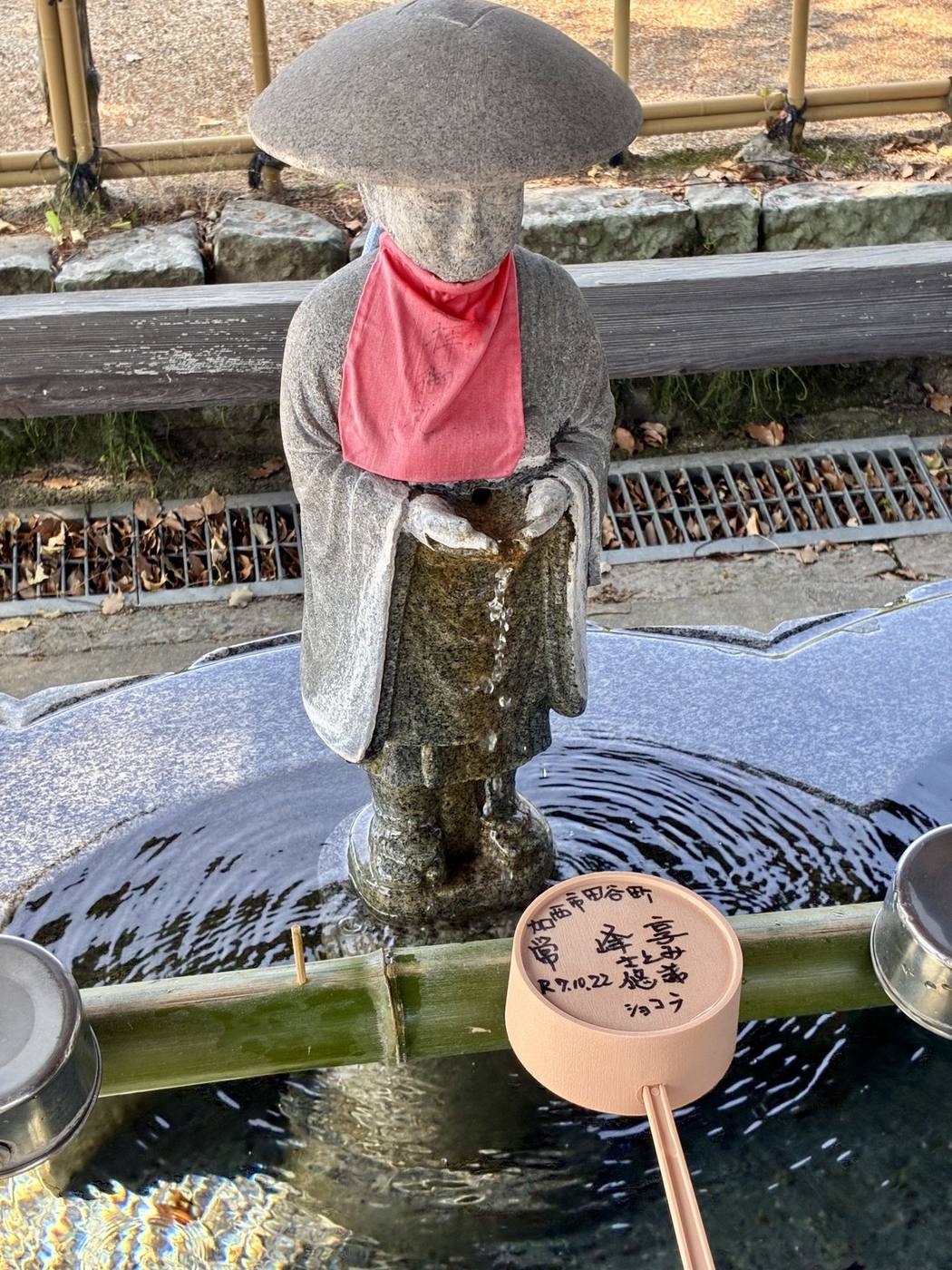
Depiction of Kōbō Daishi at the temizuya of a temple
TemizuTemizu 手水
The ritual purification of hands and mouth before prayer at a temple or shrine.
, the ritual cleansing of hands and mouth before prayer. A rare depiction of Kōbō Daishi at the Temizuya. · Photo: Sebastian Sachs

The temples give the Henro its visible order. Between them lies the journey itself: roads, coasts, forests and mountains, moments of companionship and long stretches alone.

The numbers stand for the 88 fudashoFudasho 札所
An official temple on a pilgrimage route. The Shikoku Henro has 88 principal fudasho.
and thus for the completeness of the Henro.

Keep learning

Learning module · pilot

Understanding the Henro

20 illustrated learning cards and 20 questions on the pilgrimage and on practice at the temples. With 16 or more correct answers, you can create a certificate.

Start the module
Learning module · pilot

First steps in Japanese

Words and phrases for the road and the temple, with kanji, kana and romanisation.

Practise Japanese
Glossary

69 terms for reference

Terms from the Shikoku Henro and temple practice, arranged by subject and shown with their Japanese characters.

To the glossary

✉ Feedback on the learning module

Further reading

A selection of the literature I work with for the books.

  • Bohner, Alfred (2011): Wallfahrt zu Zweien. Die 88 Heiligen Stätten von Shikoku. Ed. by David C. Moreton. 2nd ed. Bremen: Europäischer Hochschulverlag.
  • Hakeda, Yoshito S. (1972): Kūkai: Major Works. New York: Columbia University Press.
  • Kawauchi, Shōen (2017): 三教指帰と空海:偽撰の文章論. Kyōto: Hōzōkan.
  • Reader, Ian (2005): Making Pilgrimages: Meaning and Practice in Shikoku. Honolulu: University of Hawaiʻi Press.
  • Reader, Ian / Tanabe, George J. (1998): Practically Religious: Worldly Benefits and the Common Religion of Japan. Honolulu: University of Hawaiʻi Press.

05 · The author

Daishidō of Tairyū-ji in a mountain forest
The Daishidō of Tairyū-ji, Temple 21. The mountain temple is also called the “Kōya-san of the West”. · Photo: Sebastian Sachs

Why I write about it

My interest in Buddhism reaches back to a journey to Sri Lanka in 1998. I spent a week in a monastery near Dambulla, prayed and meditated in a cave temple, and cautiously took my first steps in religious ritual. These experiences deepened and changed the way I viewed religion. Later journeys to Thailand and Cambodia broadened my understanding of the Theravāda tradition.

I first travelled to Japan in 2024. The relationship between Buddhism and Shintō, the ancient pilgrimage routes and the rituals practised to this day awakened the wish to walk the Shikoku Henro. Since then, two books have been emerging from my travel notes and from questions rooted in the study of religion.

The main work is intended to bring personal experience into conversation with reflection on religious practice, telling of temples, encounters and the everyday life of pilgrimage. I am still in the middle of writing, just as I am still on the Henro.

Sebastian Sachs

I am Sebastian Sachs, an educational scientist and author. I also studied religious studies. I have travelled regularly to Japan since then. Before discovering the Shikoku Henro in 2025, my journeys took me along the Kumano Kodō and to other important pilgrimage sites in the country.

I am particularly interested in religious practice within the temples and in the variety of rituals performed there. Along the way, I observe people walking this path in their own manner.

I see myself as a learner. With each journey, I discover further sections of the pilgrimage and deepen my understanding of Japanese Buddhism.

My travel notes tell of walking between the temples and of the Henro-michi to which I wish to return again and again.